N-pyrrolidinedithiocarbamate
1. Introduction to N-pyrrolidinedithiocarbamate
Product Name: N-Pyrrolidinedithiocarbamate
Ammonium 1–pyrrolidinedithiocarbamate
Abbreviation/Abbr.: PDTC
Chemical Registration Number/CAS No.:5108-96-3
Molecular Formula: C5H12N2S2
Molecular weight: 164.3
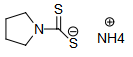
Structural formula:
Properties and Applications
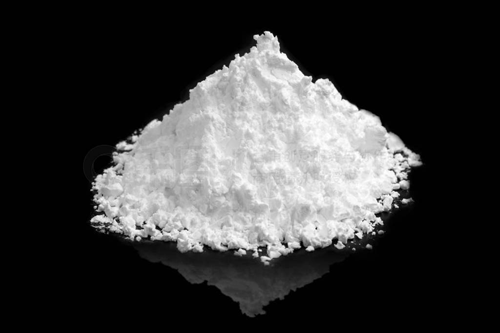
This product is a white crystalline powder, readily soluble in water, with high solubility in polar solvents such as methanol and ethanol, but insoluble or slightly soluble in non-polar solvents like benzene, petroleum ether, and n-hexane. Melting point: 150–155℃. It tends to form lumps in air, and is recommended to be stored below 20℃.
This product can be used as a drug for the treatment of tuberculosis and to remove precious metal residues in drug synthesis.
1. Metal ion extractants in analytical chemistry (core applications)
This is APDC's most classic and important application. It is widely used to isolate and enrich trace metal ions from complex water sample matrices.
The mechanism lies in APDC's sulfur atoms, which act as excellent ligands. These atoms form stable, electrically neutral, and hydrophobic chelates with most transition metal ions, including Cu²⁺, Ni²⁺, Zn²⁺, Cd²⁺, Pb²⁺, Fe²⁺/³⁺, and Co²⁺.
Method: Add APDC aqueous solution to the water sample to form complexes with metal ions. These complexes can then be extracted using organic solvents such as methyl isobutyl ketone (MIBK) or chloroform.
purpose :
Enrichment: The concentration of metal ions with very low concentration in a large amount of water sample is concentrated into a small part of organic phase, which greatly improves the detection sensitivity.
Separation: Separate the target metal ions from the complex matrix that may produce interference (such as seawater, wastewater, biological fluid, food digestive fluid, etc.) to eliminate interference.
Follow-up tests: The organic phase after extraction can be directly used for instrumental analysis, the most typical is:
atomic absorption spectrometry
Inductively coupled plasma mass spectrometry
2. Environmental monitoring
Given its extraction capabilities, APDC is the standard reagent for environmental sample analysis.
Heavy metal detection in water: used to detect trace toxic heavy metals (such as lead, cadmium, mercury, copper, nickel, etc.) in surface water, groundwater, industrial wastewater and seawater, which is crucial for environmental assessment and pollution monitoring.
3. Food and biological sample analysis
Similarly, by leveraging its extraction and enrichment capabilities, APDC is also applied in:
Food safety metal content analysis: detection of harmful metal impurities or essential trace elements in food and beverage.
Biological monitoring: Used to analyze the content of metals in biological samples such as blood and urine to assess occupational exposure or physiological status.
4. Other uses
Electrolyte additives: In some electroplating processes, APDC can be used as an additive to improve the flatness, gloss and mechanical properties of the electroplating layer.
Rubber industry: as a super accelerator, but its application is not as common as other accelerators.
Flotation agent: In mineral processing, it is used to separate some metal ores by using its hydrophobic complex with specific metal ions.
Synthetic precursor: can be used as a starting material for the synthesis of other more complex organic compounds.
2. Quality standards
| project /item | metric /Specification | Result/Result | Remarks |
| Appearance | White powder / White crystal powder |
White powder / White crystal powder |
|
| Melting point, ℃ | 155-165 | 158-165 | |
| Purity/% | ≥99.0 | 99.6 | N elemental analysis |
| Dry weight loss/weight loss on drying ,% |
≤0.50 | 0.40 |